
Advertisement
Handson learning is a powerful educational approach that actively engages students in the learning process. In science education, this method allows students to experiment, explore, and discover concepts through direct experience. By moving beyond traditional lectures and textbooks, handson learning fosters a deeper understanding of scientific principles and nurtures a love for exploration.
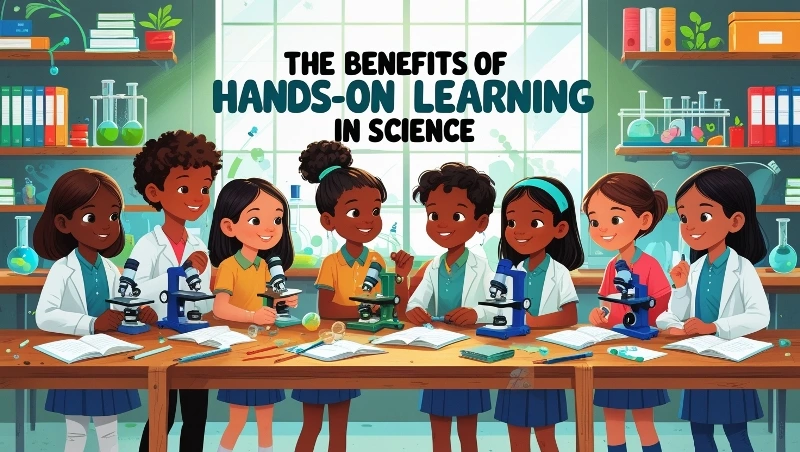
This blog post will explore the various benefits of handson learning in science, highlighting how it enhances comprehension, fosters critical thinking, promotes collaboration, and prepares students for realworld applications. We will also discuss effective strategies for implementing handson learning in science classrooms.
Table of Contents
1. What is HandsOn Learning?
Handson learning, also known as experiential learning, refers to an educational approach that emphasizes active participation and engagement. Rather than passively receiving information, students actively engage in the learning process by conducting experiments, building models, and participating in activities that allow them to explore scientific concepts firsthand.
Key Characteristics of HandsOn Learning:
Advertisement
Active Engagement: Students are involved in handson activities that encourage exploration and experimentation. This engagement helps them understand scientific concepts more effectively.
Practical Application: Handson learning allows students to apply theoretical knowledge to realworld situations. They can see how scientific principles work in practice and understand their relevance.
Collaboration: Many handson learning activities encourage teamwork and collaboration among students. Working together fosters communication skills and encourages the exchange of ideas.
Reflection: After completing handson activities, students are often encouraged to reflect on their experiences. This reflection deepens their understanding and helps them connect new knowledge to prior learning.
2. Enhancing Comprehension and Retention
One of the most significant benefits of handson learning in science is its ability to enhance comprehension and retention of information. When students engage in handson activities, they are more likely to understand and remember scientific concepts.
Experiential Learning Cycle: According to educational theorist David Kolb, handson learning follows a cycle that includes concrete experience, reflective observation, abstract conceptualization, and active experimentation. This cycle helps students connect theory with practice, leading to deeper understanding.
Visual and Kinesthetic Learning: Many students learn best through visual and kinesthetic methods. Handson activities cater to these learning styles by allowing students to see, touch, and manipulate materials. This multisensory experience reinforces learning and improves retention.
ProblemSolving Skills: Handson learning encourages students to think critically and solve problems. By conducting experiments and troubleshooting challenges, students develop analytical skills that are essential for success in science and beyond.
RealWorld Context: When students see how scientific principles apply to realworld situations, they are more likely to grasp the relevance of what they are learning. For example, a student conducting a simple experiment on plant growth can directly observe how different conditions affect growth, leading to a deeper understanding of plant biology.
3. Fostering Critical Thinking and Inquiry
Handson learning promotes critical thinking and inquirybased learning, encouraging students to ask questions, explore possibilities, and seek solutions. This approach fosters a scientific mindset that is essential for success in any scientific field.
Encouraging Curiosity: Handson activities spark curiosity and encourage students to explore their interests. When students conduct experiments, they often encounter unexpected results that prompt further investigation. This inquirydriven approach leads to a deeper understanding of scientific concepts.
Developing Analytical Skills: Through handson learning, students learn to analyze data, evaluate outcomes, and draw conclusions based on evidence. This critical thinking process is crucial for scientific research and experimentation.
Asking Questions: Handson learning encourages students to ask questions and seek answers. Rather than simply accepting information, students learn to investigate and explore topics that interest them. This questioning mindset is fundamental to the scientific process.
Experimentation and Adaptation: Handson activities often involve trial and error. Students learn that failure is a natural part of the learning process. By experimenting and adapting their approaches, they develop resilience and problemsolving skills.
4. Promoting Collaboration and Teamwork
Handson learning activities often involve collaboration among students, promoting teamwork and social skills. Working together on projects helps students develop essential interpersonal skills that are valuable in both academic and professional settings.
Group Projects: Many handson learning experiences require students to work in groups. Collaborative projects encourage students to share ideas, divide tasks, and support one another in achieving a common goal. This teamwork fosters a sense of community and belonging in the classroom.
Communication Skills: Collaborating on handson activities helps students develop effective communication skills. They learn to express their ideas, listen to others, and provide constructive feedback. These skills are crucial for future careers, where teamwork and collaboration are often essential.
Diverse Perspectives: Working with peers from different backgrounds and experiences exposes students to diverse perspectives. This diversity can enhance creativity and innovation in problemsolving, as students bring unique ideas to the table.
Building Relationships: Handson learning fosters positive relationships among students. Collaborative activities create opportunities for bonding, trust, and camaraderie, which can enhance the overall classroom environment.
5. Preparing for RealWorld Applications
Handson learning equips students with practical skills that are applicable in realworld situations. By engaging in scientific activities, students develop a better understanding of how science influences everyday life and various professions.
Skill Development: Many handson activities focus on developing practical skills that are valuable in the workplace. Students learn how to conduct experiments, analyze data, and use scientific equipment, preparing them for future careers in science and technology.
IndustryRelevant Knowledge: Handson learning often incorporates realworld scenarios and challenges. For example, students might engage in projects related to environmental sustainability or health issues, connecting their learning to current events and industry practices.
Career Exploration: Through handson learning, students can explore different scientific fields and career paths. By conducting experiments in areas such as biology, chemistry, or physics, students gain insights into potential careers in research, healthcare, engineering, and more.
ProblemSolving in Practice: Many professions require problemsolving skills. Handson learning encourages students to approach challenges creatively and develop solutions, preparing them for the complexities they may face in their future careers.
6. Enhancing Motivation and Engagement
Handson learning enhances student motivation and engagement, making science education more enjoyable and inspiring. When students are actively involved in their learning, they are more likely to be enthusiastic and committed.
Active Participation: Handson activities require active participation, which keeps students engaged. Instead of passively listening to lectures, students are involved in the learning process, leading to increased motivation and interest.
Immediate Feedback: During handson activities, students receive immediate feedback on their work. This instant feedback allows them to understand their mistakes and successes, reinforcing their learning and motivating them to improve.
Fun and Enjoyment: Engaging in handson science activities is often fun and enjoyable for students. When learning is enjoyable, students are more likely to develop a positive attitude toward science and education in general.
Personal Connection: Handson learning allows students to connect personally with the material. When they can see and touch the concepts they are learning about, it creates a deeper emotional connection to the subject matter.
7. Integrating Technology in HandsOn Learning
Technology plays a significant role in enhancing handson learning experiences in science education. By integrating technology into handson activities, educators can provide students with innovative tools and resources.
Digital Simulations: Digital simulations allow students to conduct experiments in a virtual environment. These tools provide opportunities for exploration and experimentation without the limitations of physical resources. Students can manipulate variables and observe outcomes in real time.
Data Collection Tools: Technology enables students to collect and analyze data more efficiently. Tools such as sensors, data loggers, and software programs can enhance the data collection process, making it easier for students to focus on analysis and interpretation.
Multimedia Resources: Integrating multimedia resources, such as videos and interactive presentations, can enhance handson learning. These resources can provide context and background information, making the learning experience more enriching.
Online Collaboration: Technology facilitates collaboration among students, even in remote or hybrid learning environments. Students can work together on projects, share data, and communicate their findings using online platforms and tools.
8. Overcoming Challenges in HandsOn Learning
While handson learning offers many benefits, it also presents challenges that educators may encounter. Addressing these challenges is essential for successful implementation.
Resource Limitations: Some schools may face limitations in funding and resources for handson activities. To overcome this challenge, educators can seek partnerships with local businesses, organizations, and community members to secure materials and support for handson projects.
Time Constraints: Conducting handson activities often requires additional time for preparation, execution, and reflection. Educators can integrate handson learning into existing curricula by aligning activities with learning objectives and ensuring efficient planning.
Safety Concerns: Safety is a critical consideration when conducting handson science activities. Educators should prioritize safety protocols, provide clear instructions, and ensure that students understand safety measures before engaging in experiments.
Assessment Challenges: Assessing handson learning can be challenging, as traditional assessment methods may not capture students’ practical skills and understanding. Educators can use rubrics, peer evaluations, and selfassessments to provide comprehensive evaluations of student work.
9. Creating a HandsOn Learning Environment
To maximize the benefits of handson learning, educators should create an environment that fosters exploration and experimentation. Here are some strategies for creating a handson learning environment:
Flexible Classroom Layout: Arrange the classroom in a way that promotes collaboration and movement. Flexible seating arrangements and designated workspaces for group projects can facilitate handson activities.
Access to Resources: Ensure that students have access to necessary materials, tools, and equipment for handson learning. Create a resource center where students can find supplies for their projects.
Encouraging Exploration: Foster a culture of exploration by encouraging students to ask questions, pursue their interests, and think critically about scientific concepts. Create an open and supportive environment where students feel comfortable sharing their ideas and experimenting without fear of failure.
Dedicated Time for HandsOn Activities: Allocate specific times for handson learning in the curriculum. This dedicated time allows students to engage deeply with their projects and promotes a consistent focus on experiential learning.
Showcasing Student Work: Create opportunities for students to showcase their handson projects to their peers, teachers, and the community. Organizing exhibitions or presentations not only validates their efforts but also encourages a culture of sharing knowledge and experiences.
10. Case Studies: Successful Implementation of HandsOn Learning
To understand the effectiveness of handson learning in science education, it is helpful to examine successful case studies from schools and educational programs. These examples illustrate how handson learning can transform the educational experience for students.
Case Study 1: Local High School Science Fair
A local high school in Nepal organized an annual science fair where students were encouraged to create handson projects related to environmental science. Students conducted experiments on water quality, biodiversity, and waste management in their communities.
This experience allowed them to apply theoretical knowledge to realworld challenges. The school reported an increase in student engagement, improved critical thinking skills, and greater awareness of local environmental issues.
Case Study 2: CommunityBased Learning Program
A communitybased learning program partnered with a university to implement handson science learning in rural schools. University students mentored younger students, guiding them in conducting experiments and projects.
This collaboration not only enriched the educational experience for the younger students but also enhanced the university students’ teaching skills and understanding of local challenges. The program fostered a sense of community and improved students’ interest in pursuing science.
Case Study 3: Science Curriculum Integration
An innovative school integrated handson learning into its science curriculum by incorporating projectbased learning. Students were tasked with identifying realworld problems in their communities and developing scientific solutions.
For example, one group worked on a project to design a simple water filtration system using locally available materials. This approach empowered students to take ownership of their learning and directly apply scientific principles to address community needs.
Conclusion: Embracing the Benefits of HandsOn Learning in Science
Handson learning in science education is an invaluable approach that fosters comprehension, critical thinking, collaboration, and realworld application. By engaging students in active participation, handson activities can transform the learning experience, making it enjoyable and meaningful.
As educators, parents, and communities recognize the importance of handson learning, we must work together to create environments that promote exploration and inquiry. By overcoming challenges and implementing effective strategies, we can ensure that students are equipped with the skills and knowledge necessary for success in their academic and professional pursuits.
The future of science education lies in embracing handson learning as a fundamental component of the curriculum. By inspiring a love for science and fostering curiosity, we can empower the next generation to make meaningful contributions to society and the world.
10 FAQs About the Benefits of HandsOn Learning in Science
What is handson learning in science?
Handson learning involves actively engaging students in scientific activities, experiments, and projects to enhance their understanding and application of scientific concepts.
How does handson learning benefit students?
Handson learning enhances comprehension, fosters critical thinking, promotes collaboration, and prepares students for realworld applications.
What are some examples of handson learning activities in science?
Examples include conducting experiments, building models, participating in science fairs, and engaging in field studies.
How can educators implement handson learning in the classroom?
Educators can create handson learning experiences by designing experiments, providing resources, and encouraging inquirybased projects.
What skills do students develop through handson learning?
Students develop problemsolving skills, critical thinking, communication skills, teamwork, and practical skills relevant to scientific inquiry.
Can handson learning improve student engagement?
Yes, handson learning enhances student engagement by making learning interactive and enjoyable, encouraging active participation.
How can technology be integrated into handson learning?
Technology can be integrated through digital simulations, data collection tools, and multimedia resources that enhance handson experiences.
What challenges might educators face in implementing handson learning?
Challenges include limited resources, time constraints, safety concerns, and the need for effective assessment methods.
How can parents support handson learning at home?
Parents can support handson learning by providing materials for experiments, encouraging curiosity, and facilitating discussions about scientific concepts.
What is the longterm impact of handson learning on students?
Handson learning fosters a love for science, develops critical skills, and prepares students for future careers in STEM fields, contributing to their personal and professional growth.
By incorporating handson learning into science education, we can cultivate a generation of curious, innovative, and engaged learners. Embracing this approach will not only enhance students’ academic experiences but also empower them to make meaningful contributions to their communities and the world.


